The Right Plant, the Right Place, Planted Right
Planting a tree or shrub in Colorado Springs is not the same as planting one in Kansas or California. At 6,000+ feet elevation with alkaline clay soil, 15 inches of annual rainfall, and temperature swings from -10 to over 100 degrees, species selection and planting technique determine whether your investment thrives for decades or dies in its first summer.
CN Landscaping provides professional tree and shrub planting services across Colorado Springs, Monument, Fountain, Falcon, Black Forest, Larkspur, and Perry Park. We select species proven to perform in El Paso County conditions, plant them at the correct depth for clay soil, and set up watering schedules that get roots established through that critical first year.
Every planting includes proper hole preparation, root ball inspection, backfill amendment, mulching, staking (for trees), initial deep watering, and a written care guide. We also offer a 1-year plant warranty — if a tree or shrub we planted fails within 12 months and you've followed the watering guide, we replace it.
Best Trees for Colorado Springs
These species are proven performers in El Paso County's elevation, soil, and climate conditions. We recommend them based on decades of regional landscaping experience.
Colorado Blue Spruce
The Colorado state tree thrives throughout the Pikes Peak region. Blue Spruce grows 50-75 feet tall with a dense, pyramidal form and striking silver-blue needles that hold color year-round. It's drought-tolerant once established, handles full sun, and serves as an excellent windbreak and privacy screen. Best planted in spring with adequate spacing — mature spread reaches 20-25 feet. Susceptible to Cytospora canker in stressed conditions, so proper watering during establishment is essential.
Ponderosa Pine
A native Front Range conifer that grows naturally from Colorado Springs through Black Forest and beyond. Ponderosa Pine reaches 60-100 feet with an open, sculptural canopy and reddish-orange bark that adds winter interest. It's one of the most drought-tolerant large conifers available, developing a massive taproot that reaches deep water sources. Ideal for large properties, acreage, and naturalistic landscapes. Requires minimal supplemental watering once established (2-3 years).
Quaking Aspen
Aspens bring a mountain aesthetic to Colorado Springs properties, with white bark and leaves that turn brilliant gold in fall. They grow 20-50 feet tall and spread through root suckers to form groves over time. Aspens prefer afternoon shade at lower elevations — the east or north side of a home works well. They require more water than conifers but tolerate Colorado's clay soil. Plant in groups of 3-5 for the most natural look, or use them as accent trees near patios and gathering areas.
Bur Oak
One of the toughest shade trees for Colorado conditions. Bur Oak grows 60-80 feet with a massive spreading canopy that provides excellent shade coverage. It tolerates drought, alkaline clay soil, wind, and temperature extremes better than most deciduous shade trees. The thick, corky bark is naturally fire-resistant — a consideration for properties in Black Forest and the wildland-urban interface. Bur Oaks are slow-growing (12-18 inches per year) but extremely long-lived, often surpassing 200 years.
Adapted Shrubs for Colorado Landscapes
Shrubs provide structure, color, and seasonal interest between trees and groundcover. We plant species that handle Colorado Springs' conditions without demanding constant attention.
- Rabbitbrush (Chamisa): A native shrub that erupts in brilliant yellow flowers in fall and requires virtually no supplemental water once established
- Apache Plume: Feathery pink seed heads follow white spring flowers on this drought-tough native that thrives in rocky, well-drained soil
- Three-Leaf Sumac: Dense, spreading shrub with excellent fall color (orange-red) that handles full sun, clay soil, and drought — ideal for erosion control on slopes
- Blue Mist Spirea: Produces blue flowers from midsummer through frost that attract pollinators, grows 3-4 feet, and handles Colorado's heat and dry air
- Potentilla (Shrubby Cinquefoil): A Colorado native blooming yellow, white, or orange all summer on a 3-4 foot mounding shrub that's virtually indestructible at altitude
- Karl Foerster Grass: A clumping ornamental grass that adds vertical texture, movement, and year-round interest with minimal water needs
Planting in Colorado Clay Soil
Colorado Springs sits on heavy clay soil that presents specific challenges for planting. Clay holds moisture when wet, compacts when dry, and has a pH of 7.5-8.5 (alkaline) that locks out iron and other nutrients. Planting technique matters more here than in loamy or sandy soil.
Hole depth and width: We dig planting holes 2-3 times wider than the root ball but only as deep as the root ball height. The wide hole breaks up surrounding clay so roots can expand outward, while planting at the correct depth prevents crown rot in wet clay.
Root flare above grade: In clay soil, the root flare (where the trunk widens at the base) must sit 1-2 inches above the surrounding ground level. This prevents water from pooling against the trunk — the number one killer of newly planted trees in clay soil.
Backfill amendment: We mix native clay soil with 25% compost for backfill. Using 100% compost or potting soil creates a "bathtub effect" — water soaks into the loose fill, hits the clay walls, and pools around roots. The 75/25 blend improves drainage without creating this problem.
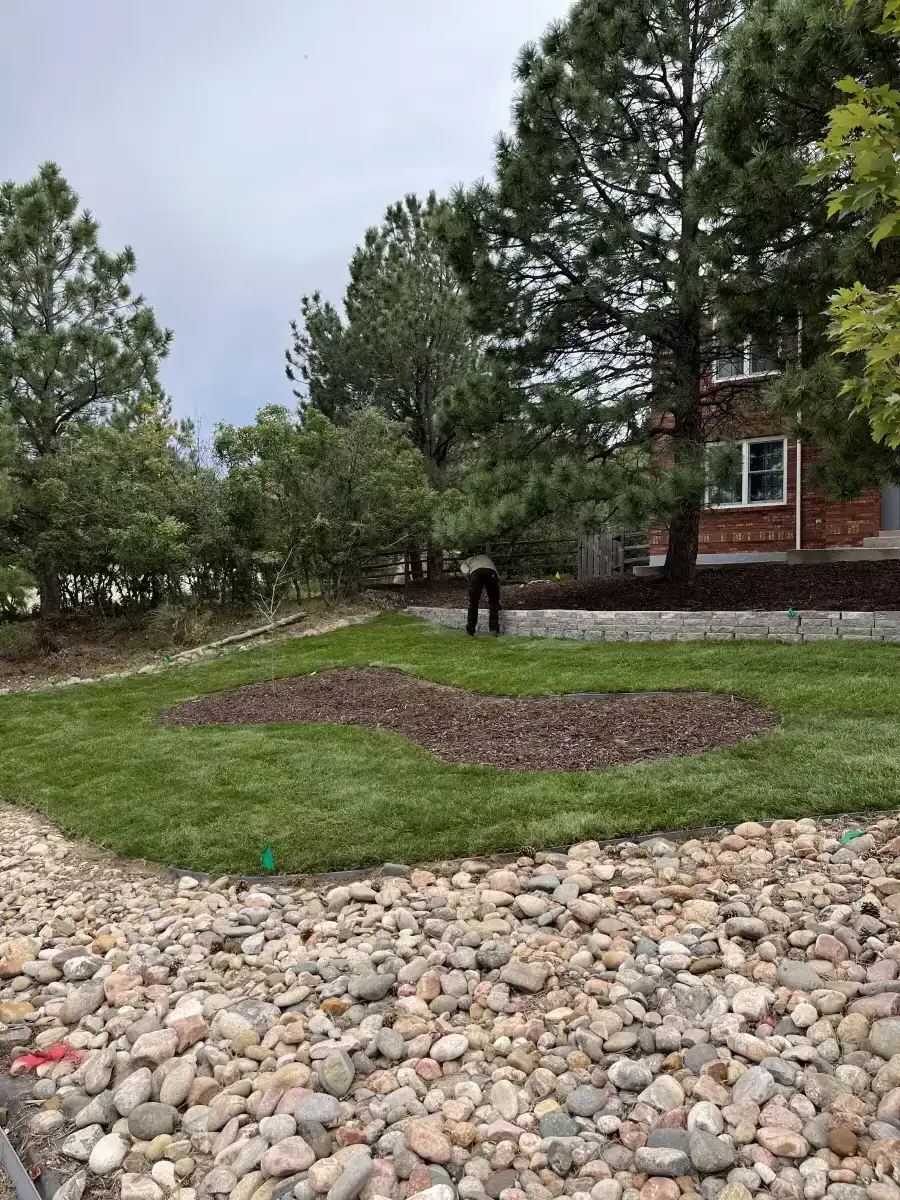
Mulch ring: A 3-4 inch layer of wood chip mulch in a 3-foot ring around the tree retains moisture, moderates soil temperature, and prevents competition from grass. We always leave a 4-inch gap between mulch and the trunk to prevent moisture rot.
Seasonal Planting Calendar for Colorado Springs
Timing your planting correctly gives trees and shrubs the best chance of establishing strong root systems before facing Colorado's temperature extremes.
Spring (April - May)
The primary planting season. Soil temperatures warm above 50 degrees, spring moisture aids establishment, and trees get a full growing season before winter. Plant bare-root trees in early April before bud break. Container-grown and balled-and-burlapped trees can be planted through May. This is the best window for deciduous trees that need maximum growing time to harden off before fall.
Fall (September - October)
The second-best window and arguably the best for evergreen conifers. Warm soil promotes root growth while cooler air reduces transplant shock and water stress. Fall-planted trees enter dormancy with an established root system and emerge strong in spring. Plant by mid-October — roots stop growing when soil temperature drops below 40 degrees. Mulch heavily and water through November.
Summer & Winter
Summer planting is possible for container-grown trees with aggressive watering — twice-daily soaking for the first month. Avoid planting during heat waves above 95 degrees. Winter planting is not recommended in Colorado Springs; frozen ground prevents proper hole preparation and root establishment. However, winter is an excellent time to plan, design, and source trees for spring installation.
Tree & Shrub Planting FAQ
The best time to plant trees in Colorado Springs is spring (mid-April through May) or early fall (September through mid-October). Spring planting gives trees an entire growing season to establish roots before winter. Fall planting takes advantage of warm soil and cooler air temperatures that reduce transplant stress. Avoid planting in summer heat or after mid-October when the ground begins freezing. Container-grown trees can be planted throughout the growing season with extra watering attention.
The best trees for Colorado Springs are species adapted to alkaline soil, low humidity, intense UV, and temperature swings from -10 to 100 degrees F. Top evergreen choices include Colorado Blue Spruce (the state tree), Ponderosa Pine, Austrian Pine, and Rocky Mountain Juniper. Top deciduous choices include Quaking Aspen, Bur Oak, Honeylocust, and Autumn Blaze Maple. All of these handle the 6,000+ foot elevation, limited rainfall, and clay soil conditions found across El Paso County.
In Colorado's clay soil, plant trees so the root flare sits 1-2 inches ABOVE the surrounding grade — never below it. Clay soil drains slowly, and burying the root flare creates a bowl that holds water against the trunk, causing crown rot. Dig the hole 2-3 times wider than the root ball but only as deep as the root ball height. Backfill with the native clay soil amended with 25% compost — do not use pure compost or potting soil, as this creates a "bathtub effect" where water pools in the amended hole.
Tree planting costs in Colorado Springs range from $200 to $500 for small ornamental trees (5-6 foot), $500 to $1,500 for medium shade trees (8-12 foot), and $1,500 to $4,000+ for large specimen trees (14-20+ foot) including the tree, delivery, planting, staking, and initial watering setup. Shrub installation runs $50 to $200 per shrub depending on species and size. Volume discounts apply for multi-tree and full-landscape planting projects. All installations include a 1-year plant warranty.
Newly planted trees in Colorado Springs need deep watering 2-3 times per week for the first growing season. Apply 10-15 gallons per inch of trunk diameter at each watering, using a slow drip or soaker hose to ensure water penetrates the clay soil rather than running off. Continue watering through October — Colorado's dry fall and winter are when most transplant losses occur. Winter watering is critical: water once monthly during warm spells (above 40 degrees F) when the ground is not frozen.
Ready to Plant Something That Lasts?
Get a free estimate for professional tree and shrub planting. Native species, proper technique, and a 1-year warranty. Serving Colorado Springs, Monument, Fountain, Falcon, Black Forest, Larkspur, and Perry Park.