Landscaping Among Perry Park's Red Rock Formations
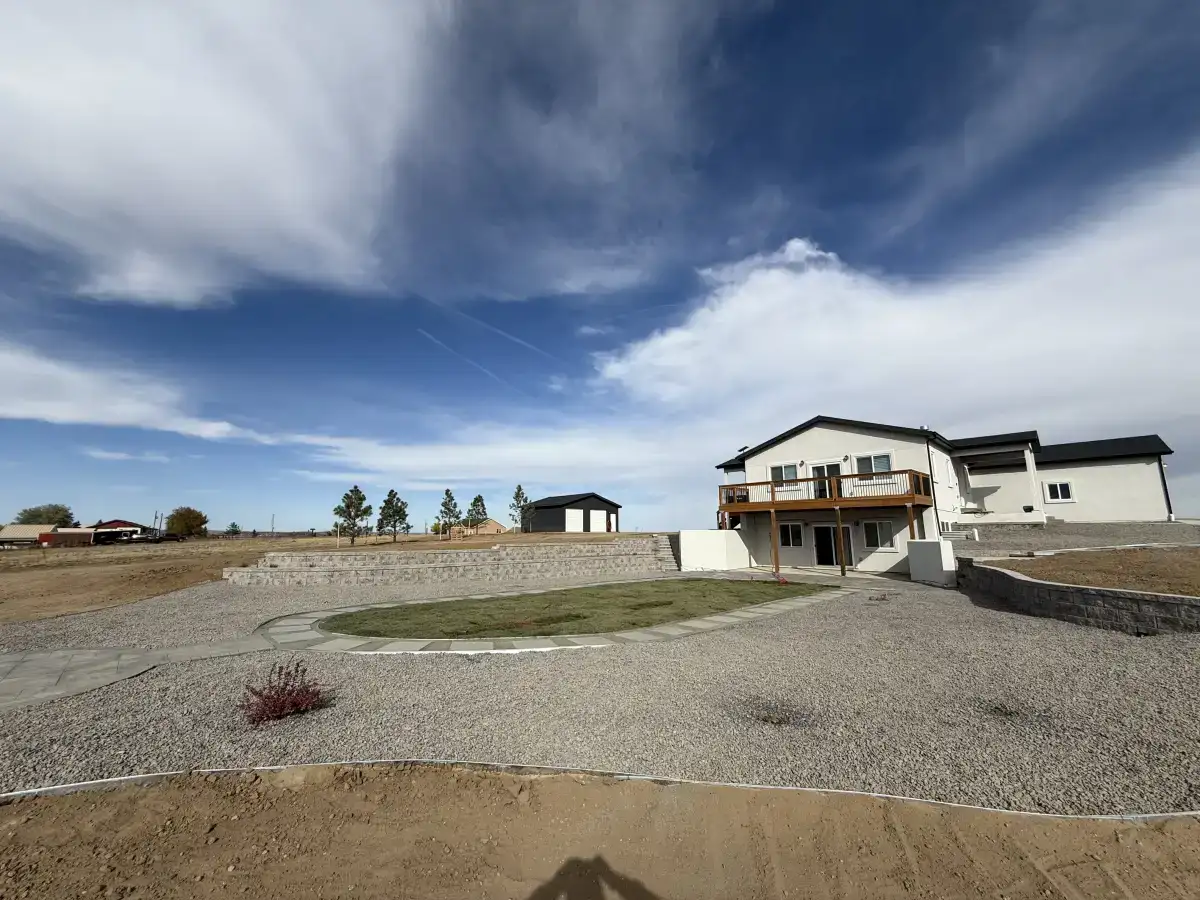
Perry Park is a distinctive gated community near Larkspur in southern Douglas County, approximately 35 minutes north of our Colorado Springs office. What makes Perry Park unlike any other community we serve is its geology — the neighborhood is built among towering red sandstone formations that resemble a miniature Garden of the Gods, creating a landscape setting so dramatic that no other community in the Pikes Peak region can match it.
These 300-million-year-old Lyons Sandstone formations rise directly from residential lots, casting long shadows across properties and creating microclimates that vary from one yard to the next. A home on the south face of a rock formation may receive full sun from dawn to dusk, while its neighbor 100 yards away sits in shade until noon. This geological drama makes Perry Park one of the most interesting — and most challenging — communities for landscape design along the entire Front Range.
Perry Park's roughly 900 homes are governed by the Perry Park Homeowners Association, which maintains strict architectural review standards that apply to all exterior modifications including landscaping. The community centers around the Perry Park Country Club with its golf course, and the overall aesthetic expectation is one of refined mountain living — designs must enhance the natural beauty of the red rock setting without competing with it.
Working Within Perry Park's HOA Guidelines
Perry Park's HOA design standards reflect the community's commitment to preserving the dramatic geological setting. The architectural review committee evaluates landscape proposals based on compatibility with the natural environment, impact on neighboring properties, and adherence to the community's mountain-residential character. We have navigated these requirements on multiple Perry Park projects and understand what the committee prioritizes.
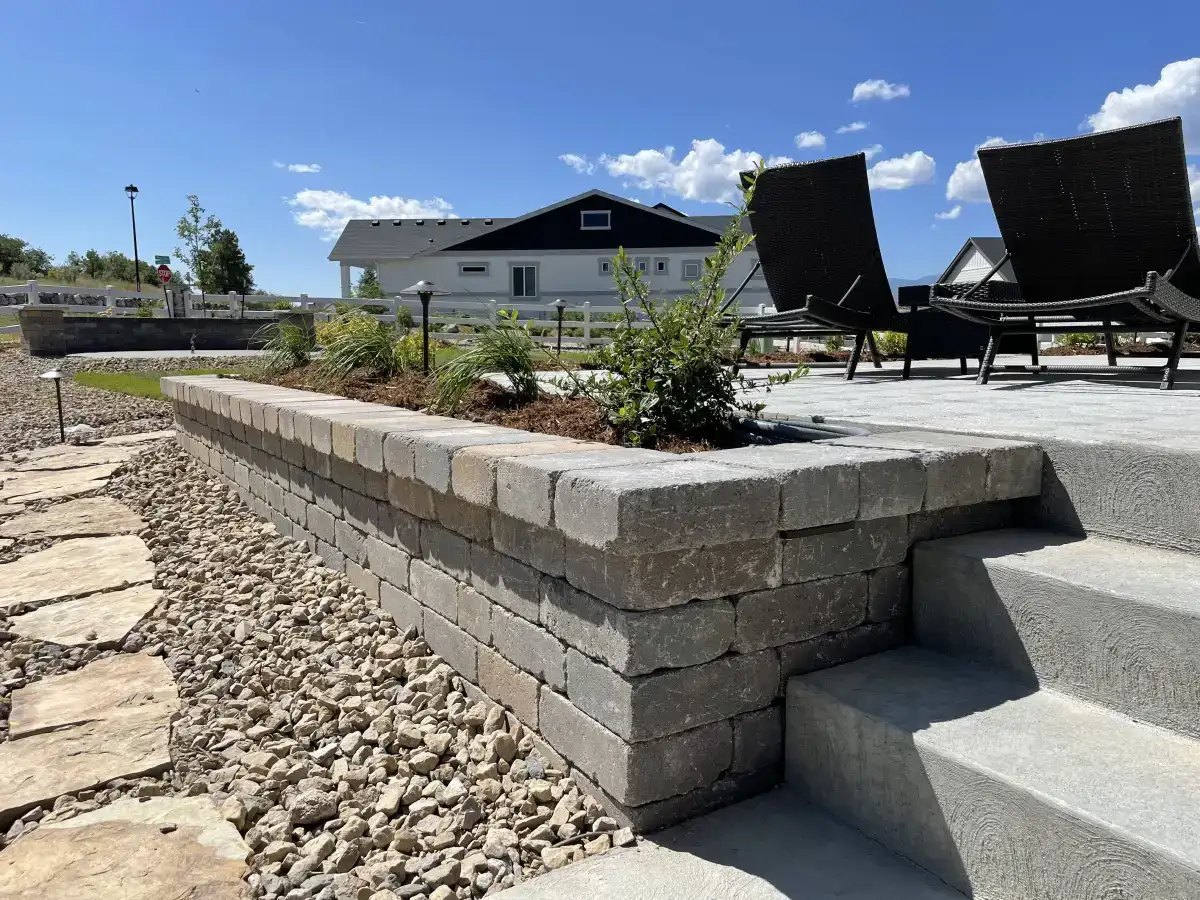
Material selection is critical for approval. The committee favors natural stone that complements the surrounding red sandstone formations — Colorado Red flagstone, Moss Rock boulders, and natural-cut sandstone walls that echo the existing geology. Manufactured pavers and concrete block retaining walls can be approved, but must be in earth-tone colors that harmonize with the red rock backdrop. Bright or contrasting materials are routinely rejected.
Planting designs must use species appropriate to the mountain environment and avoid the suburban landscaping look of lower-elevation communities. The committee favors native and adapted species — Gambel Oak, Mountain Mahogany, Apache Plume, native grasses, and conifer species that already exist in the Perry Park landscape. Formal hedgerows, tropical-looking plants, and expansive lawns are discouraged in favor of naturalized designs that blend the cultivated landscape into the surrounding terrain.
We prepare the complete HOA submittal package as part of our design process for every Perry Park project: detailed site plan, material specifications with samples, planting plan with species list, drainage documentation, and construction timeline. Our familiarity with the committee's preferences and past approvals helps us design projects that move through review efficiently, avoiding the delays that come from submitting designs that do not align with community standards.
Building on Perry Park's Geological Foundation
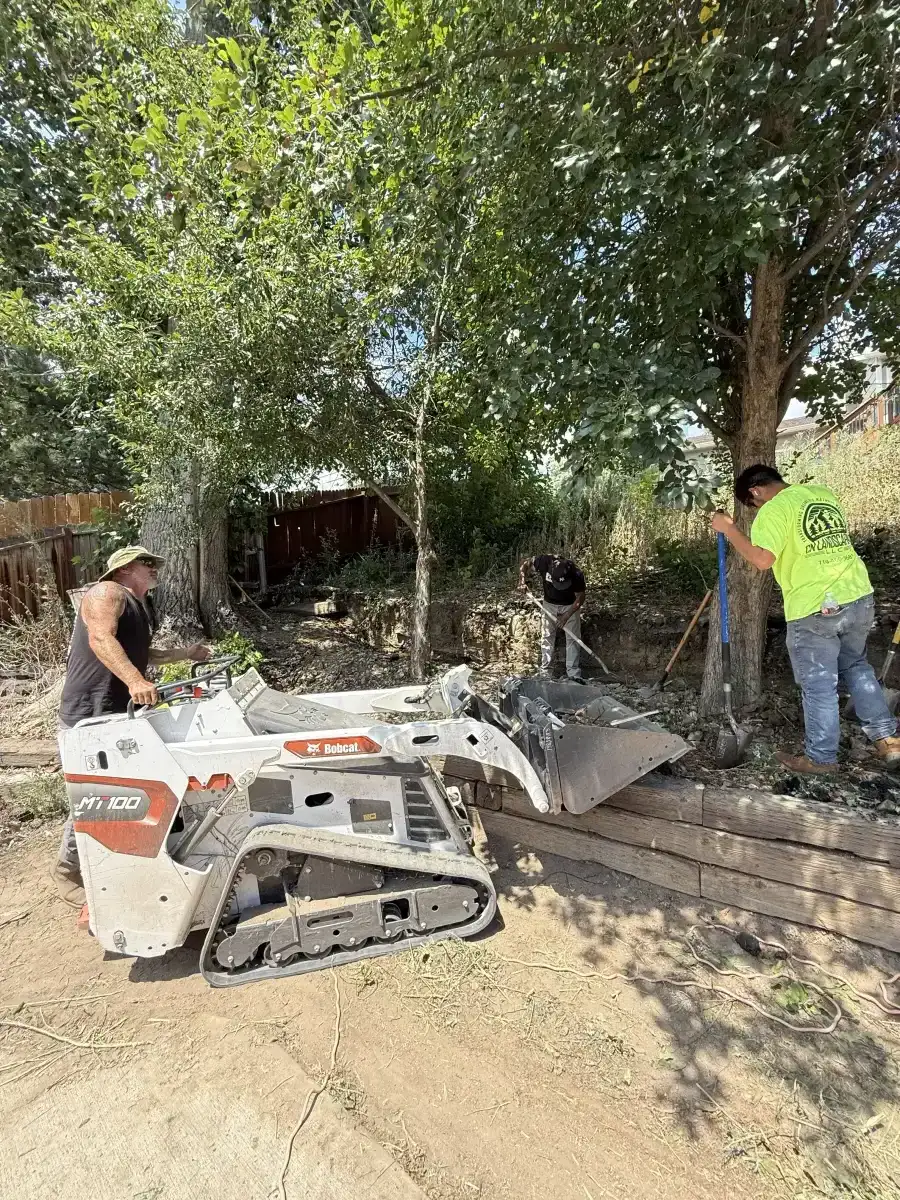
The red sandstone formations that define Perry Park create construction challenges that require specialized techniques. Many properties have exposed bedrock at or just below the surface, making conventional excavation for patios and retaining walls impractical. We use rock-cutting equipment and shallow-set construction methods to install hardscape on these sites — dry-laid flagstone on compacted crusher fines, low-profile retaining walls anchored directly to bedrock, and paver systems with reduced-depth bases adapted to the rock substrate.
Drainage in Perry Park follows the rock formations rather than traditional topographic patterns. Water channels between formations, pools behind rock outcroppings, and sheet-flows across exposed sandstone faces create drainage challenges that must be addressed in every landscape design. We route drainage around structures using swales and French drains that follow the natural rock-guided water paths rather than fighting them.
The rock formations also create pronounced microclimate variation across individual lots. South-facing exposures against rock walls can be 10 to 15 degrees warmer than nearby shaded areas, essentially creating a separate planting zone on the same property. We map these microclimates during site assessment and design planting zones accordingly — using warmth-loving species in sheltered south exposures and cold-tolerant, shade-adapted plants on north-facing slopes behind rock formations.
Perry Park Landscaping FAQ
Yes. We prepare the full architectural review committee submittal package for every Perry Park project, including the site plan, material specifications, planting plan, drainage documentation, and construction timeline. We know the committee's expectations and design accordingly. Our involvement in the approval process is included in our standard design-build service — there is no additional charge for HOA submittal preparation. We also attend review meetings if the committee has questions about the project.
The red sandstone formations in Perry Park are a protected natural feature, and the HOA strictly prohibits any modification to the rock formations themselves. We design around and alongside them, using the formations as natural backdrops and boundaries rather than construction anchors. Our excavation methods keep equipment and digging away from formation bases where root-like rock tendrils extend underground. When we build retaining walls or patios adjacent to formations, we leave buffer gaps that allow the rock face to be visible and accessible, and we never attach structures directly to the sandstone.
Colorado Red flagstone is the most natural complement — it is the same Lyons Sandstone formation in a workable slab form, creating perfect visual continuity. Moss Rock boulders in red and tan tones work well for accent walls and garden borders. For retaining walls, we use earth-tone segmental block in warm sandstone colors, or natural-cut sandstone for a more organic look. Decomposed granite in red or gold tones is an excellent pathway and ground cover material that ties the cultivated landscape to the surrounding geology. We avoid gray, white, or cool-toned materials that create jarring contrast with the warm red rock palette.
Ready to Enhance Your Perry Park Property?
Get a free estimate for HOA-compliant landscape design, patios, retaining walls, and hardscaping in Perry Park.