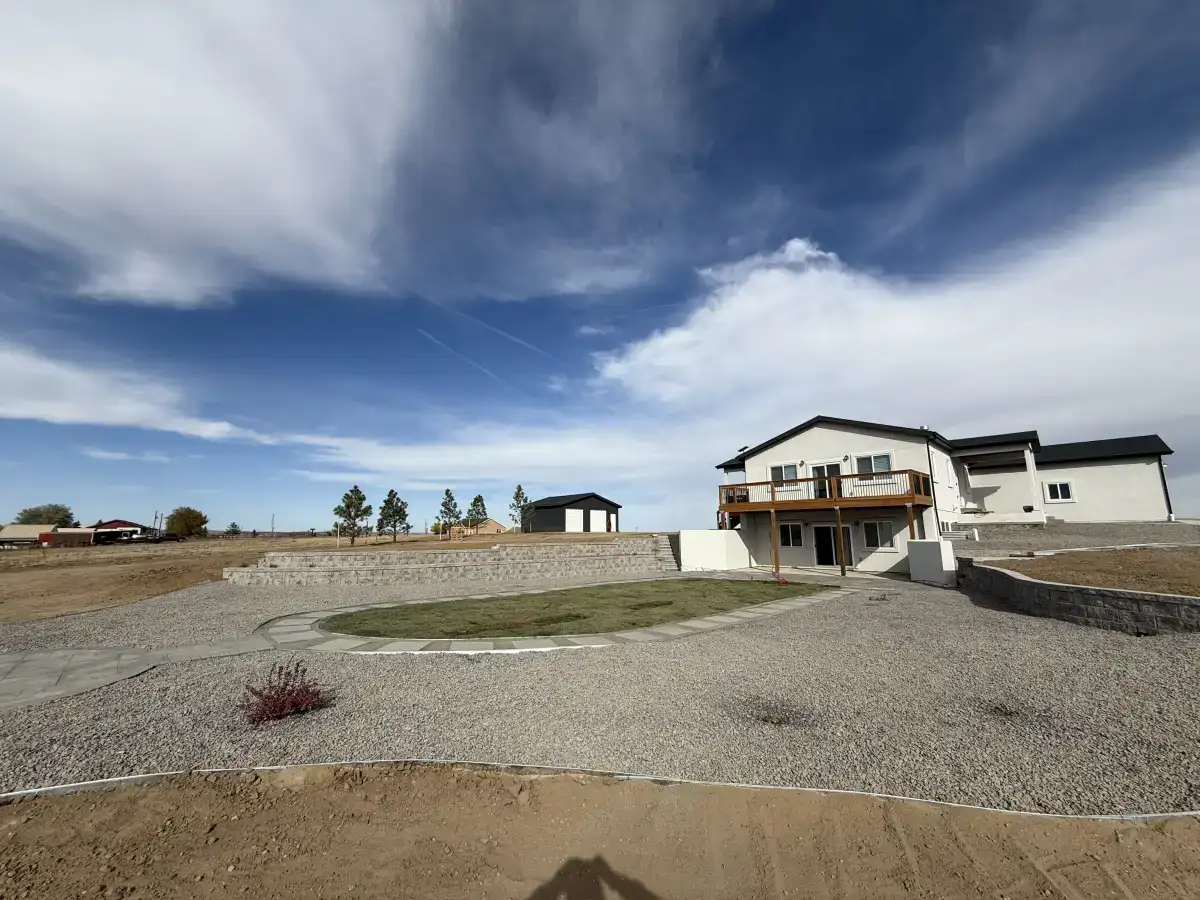
Completed landscape with lawn, rock borders, and planted beds

Landscaping in Monument, CO

Thoughtful landscapes for life near 7,000 feet—where grade, wind, snowmelt, planting exposure, and freeze-thaw movement all belong in the plan from day one.

The Palmer Divide Changes the Order of Work

A good Monument landscape is more than a collection of attractive materials. It is a connected system: the patio sheds water without sending it into a planting bed, the retaining wall relieves pressure behind it, irrigation reaches the plants that need it, and the most exposed areas are finished with materials suited to that exposure.

Monument’s own garden and landscaping guidance points residents toward plant varieties suited to roughly 7,000 feet. That elevation matters. Strong sun, wind, winter cold, spring snow, and repeated temperature swings can expose weak choices quickly. The practical response is not to make every yard look the same. It is to study the property before deciding where lawn, artificial turf, decorative rock, mulched beds, trees, shrubs, patios, or walls will perform best.

CN Landscaping LLC brings the parts together through full-service landscaping. One plan can coordinate landscape design, hardscape, grading, drainage, planting, turf, rock, irrigation, and lighting so each layer supports the next. That is especially useful on sloped lots, exposed corners, pine-adjacent properties, and yards where an outdoor living area needs to connect cleanly with the house.

Start With the Site, Not a Material List

Monument landscaping lasts longer and works better when water, use, and exposure are resolved before colors and finishes take over the conversation.

Give snowmelt and stormwater a clear path

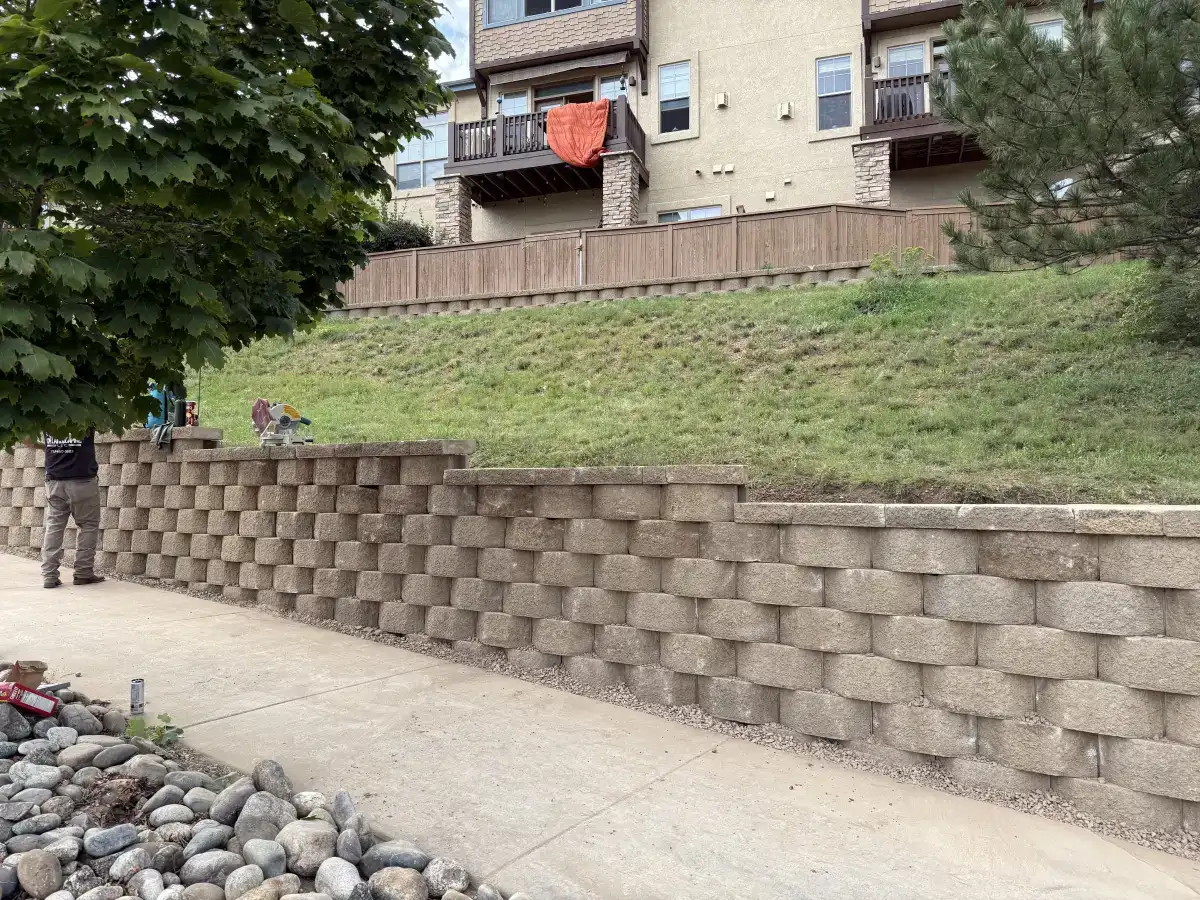
Water movement affects nearly everything that follows. A new patio needs positive drainage away from the house. Retaining walls need drainage behind them. Rock and mulch areas need defined edges so material does not migrate into turf. Low points should be addressed before sod or planting beds are installed, and downspout discharge should be considered as part of the whole yard rather than treated as an isolated detail.

On a Monument property with grade changes, that may mean combining careful grading with a wall, swale, drain, or dry creek treatment. The right solution depends on what the water is doing on the specific lot. CN Landscaping can coordinate those decisions with retaining wall construction, patio elevations, rock installation, and the finished planting plan.

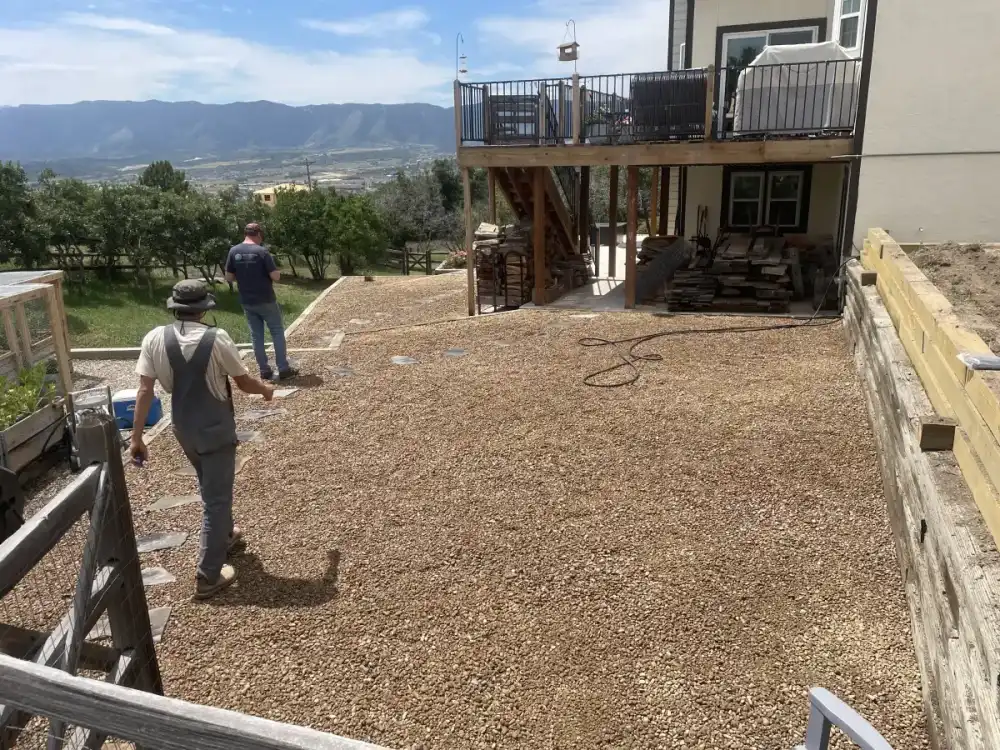
Prepared hardscape base on a graded residential property
Base preparation and drainage decisions happen before the finish surface.

Put each surface where it earns its place

A low-maintenance yard does not have to be all rock, and a family yard does not need lawn in every open area. A more useful plan assigns a job to each zone. A patio handles dining and seating. Sod or artificial turf can create a defined activity area. Xeric planting and decorative rock can simplify lower-traffic edges. Trees and shrubs can frame views, soften hardscape, and create structure without filling every bed.

Exposure helps decide the mix. A windy, full-sun area may need a different planting palette and irrigation schedule than a protected bed near the house. Shade below mature trees can change turf expectations. Rock can reduce routine upkeep, but it also holds heat in bright sun; mulched beds may be more hospitable around some new plantings. CN Landscaping weighs those tradeoffs rather than prescribing one finish for the entire property.

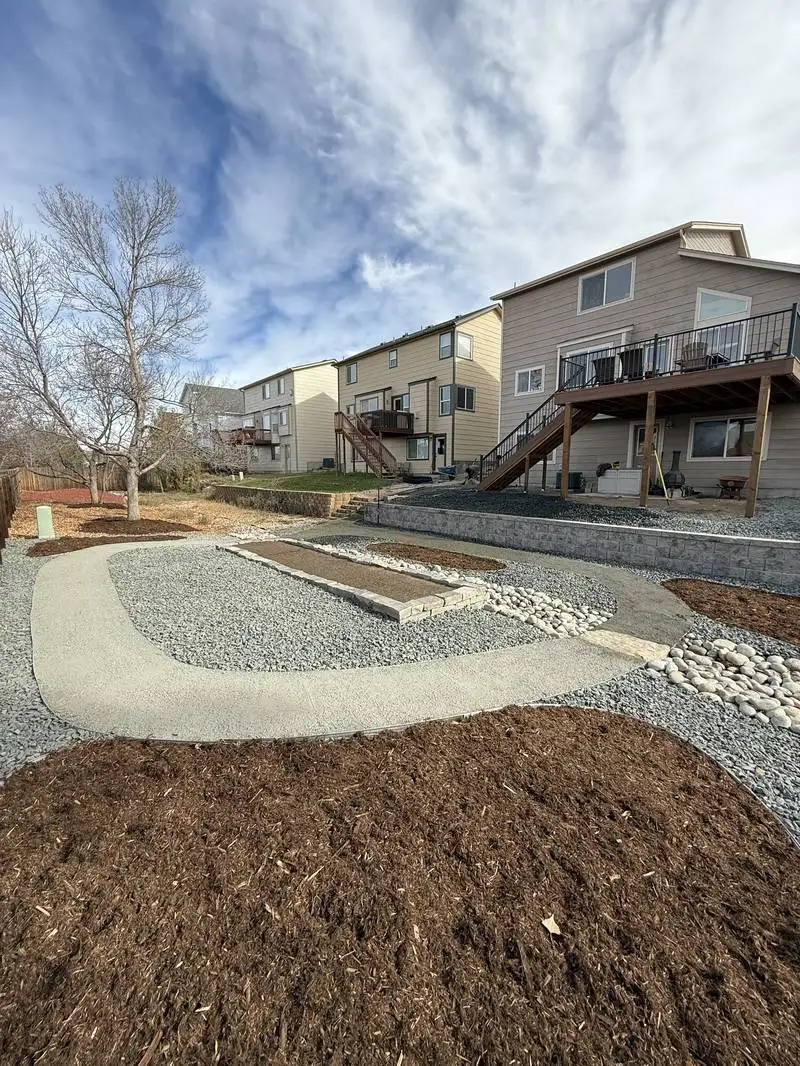
Residential landscape combining lawn, decorative rock, and defined planting areas
Mixed zones keep green space purposeful and lower-care areas intentional.

Coordinate the structure before the finishing layer

Patios, walls, steps, irrigation lines, lighting sleeves, planting beds, and turf boundaries are easiest to build when their elevations and connections are settled together. Installing them out of sequence can create avoidable rework: a finished walkway may block irrigation access, a planting bed may sit below runoff from a patio, or a later wall may require equipment to cross new sod.

For a complete backyard, CN Landscaping can align patio installation with seating areas, walkways, grading, planting, and an outdoor living space. For a front yard, the sequence may begin with entry circulation and drainage, then move into rock, planting, lighting, and the final lawn or turf edge. The visible result feels simple because the work underneath was coordinated.

Outdoor living area with a fire feature, stonework, and integrated planting
Connected spaces begin with one plan for circulation, grade, and use.

Build the Landscape Around How You Live Outside

The strongest plan is not the one with the most features. It is the one that gives everyday activities a comfortable place while keeping upkeep realistic.

Explore landscape design and installation
Gather

Patios and outdoor rooms

Size seating and dining areas for real furniture and circulation, then connect them to the home with comfortable steps and walkways.

Play

Sod or artificial turf

Keep green space where it supports pets, play, or a clean view instead of carrying lawn into narrow or difficult-to-water corners.

Soften

Trees, shrubs, and flowers

Use planting to create shade, seasonal interest, screening, and transitions between the architecture and harder landscape materials.

Simplify

Xeriscaping and rock

Reduce routine care in selected zones with defined rock, mulch, and water-wise planting—not an undifferentiated field of gravel.

A Practical Path to Installation

Whether the yard is completed at once or in phases, the decisions should follow the physical order of the work.

Start a Conversation
  1. 01

    Walk the property

    Look at grade, runoff, downspouts, sun, wind, existing vegetation, access, utilities, and the way people move between the house and yard.

  2. 02

    Set priorities

    Identify the non-negotiables first: water management, usable space, privacy, lower maintenance, curb appeal, play space, or a better place to gather.

  3. 03

    Connect the layers

    Coordinate walls, patios, steps, drainage, sleeves, irrigation zones, planting beds, lighting, and turf boundaries before construction starts.

  4. 04

    Install from the ground up

    Complete earthwork, drainage, structure, and underground systems before adding soil preparation, planting, turf, rock, and final details.

Answers Before You Plan the Yard

These are the practical questions that help turn ideas into a landscape suited to the property.

A Monument landscaping plan should account for the property’s grade, drainage and snowmelt paths, wind and sun exposure, plant suitability at roughly 7,000 feet, irrigation zones, freeze-thaw movement, access, and any neighborhood requirements before finish materials are selected.

CN Landscaping provides landscape design and installation, patios, retaining walls, artificial turf, sod, decorative rock, tree and shrub planting, xeriscaping, irrigation, lighting, hardscaping, and outdoor living spaces in Monument.

Yes. A mixed landscape can reserve lawn or artificial turf for useful activity areas and use rock, mulched planting beds, drip irrigation, and xeriscaping in lower-traffic zones. The right balance depends on sun, wind, drainage, maintenance preferences, and how the yard will be used.

Yes. A phased plan works best when grading, drainage, retaining walls, patio elevations, sleeves, irrigation, planting, turf, and lighting are coordinated at the beginning. That keeps early work from blocking or damaging later phases.

Make the Yard Work From the Ground Up

Tell CN Landscaping what you want to change and what the property is doing today. We’ll start with the site, connect the right services, and shape a clear path forward.